
The short answer is that Cape Town puts an unusual combination of pressures on a building at the same time. Almost all of the year’s rain arrives in four months, it arrives sideways on winter gales rather than falling straight down, a large share of the housing stock was built before modern damp proofing was standard, and the walls themselves are often holding salts that pull moisture out of the air. Add cold indoor surfaces and windows that stay shut from June to September, and damp becomes close to predictable.
That is the whole answer in a paragraph. The rest of this article explains each part, because knowing which of those causes is behind your damp is the difference between a repair that holds and one that comes back next winter.
Cape Town’s rain is concentrated, and it arrives sideways
Roughly seventy percent of Cape Town’s annual rainfall falls between June and September. June is the wettest month by a distance. February is close to nothing.
So the entire year’s water load on your building is compressed into a four-month window, and it does not arrive gently. It comes in on north-westerly cold fronts, frequently with winds of fifty to sixty-five kilometres an hour and harder gusts behind them. That pushes water into a building rather than dropping it onto one.
This is the single most important thing to understand about damp here. Horizontal water gets past details that vertical water runs harmlessly over. A wall, a window frame, a parapet or a flashing can be watertight in still rain for years and still let water through when the front comes in from the right direction.
It is also why so much Cape Town damp is seasonal and one-sided. If your damp appears on the north or west face of the house and only in winter, wind-driven rain is the likeliest cause. Damp on a sheltered southern wall that never dries out is usually something else entirely.
The summer south-easter does its own damage, and it is worth mentioning because almost nobody connects the two. The south-easter is a dry wind, so it does not cause damp directly. What it does is mechanical: it lifts sheet edges, works at poorly bonded coatings, and sandblasts surfaces with airborne grit. It spends five months quietly loosening the details, and then the winter fronts arrive and exploit every one of them.
“Cape Town” is not one climate
This is the part that gets missed, and it is why a single answer to “why is my house damp” does not work across the metro.
Rainfall varies dramatically over very short distances here because of the mountains. Air forced upward over the terrain drops its water on the way, so the eastern slopes above Kirstenbosch, Newlands and Constantia take considerably more rain than the City Bowl, Camps Bay or the West Coast side, and they are only a few kilometres apart. A house in Newlands is handling substantially more water every winter than a house in Milnerton.
Exposure differs too. The coastal corridor through Table View, Milnerton, Bloubergstrand and the Atlantic Seaboard sits in salt-laden air continuously. That corrodes roof fixings, gutters and sheeting years faster than it happens inland, and corroded fixings and rusted gutters are two of the most common entry points we find. The same metal roof in Brackenfell will outlast it comfortably.
And the ground is not uniform. Much of the northern belt, from Goodwood through Parow, Bellville and out to Brackenfell and Kuils River, sits on heavy clay. Clay holds water. After a wet winter, the soil packed against your foundations and lower walls can stay saturated for weeks after the rain has stopped, which keeps moisture pressed against the masonry long after the visible cause has gone away.
So when you call us, tell us your suburb. It genuinely changes what we look at first.
Much of the housing stock predates modern damp proofing
A large share of Cape Town’s homes were built before the 1970s, and a good number before the 1960s. Modern construction includes an effective damp-proof course and controlled drainage as standard. A lot of the older stock either never had those, or has them in a form that has quietly failed after fifty or sixty years.
You see this across the older southern suburbs, the city fringe through Woodstock and Observatory, and in the older northern suburbs. Solid-wall construction, no cavity, and in many cases no functioning barrier between the ground and the wall.
Here is the part worth knowing before you spend anything: in our experience, the damp course is more often bridged than absent. Decades of raised paving, a built-up flowerbed, a new driveway level, or plaster carried down past the barrier will defeat a perfectly good damp course. That is a far cheaper problem to solve than a missing one, and it is why walking the outside of the house is the first thing we do before anyone talks about injecting chemicals into your walls.
The sea sand problem: salts that pull water out of the air
This one is specific to the older Cape stock, and it explains damp that seems to have no source at all.
A lot of older Cape buildings were plastered using sea sand, which carries salts. Those salts are hygroscopic, meaning they actively draw moisture out of the air and hold it in the wall. A wall carrying them can feel damp on a dry day with no rain, no leak, and no rising moisture to blame.
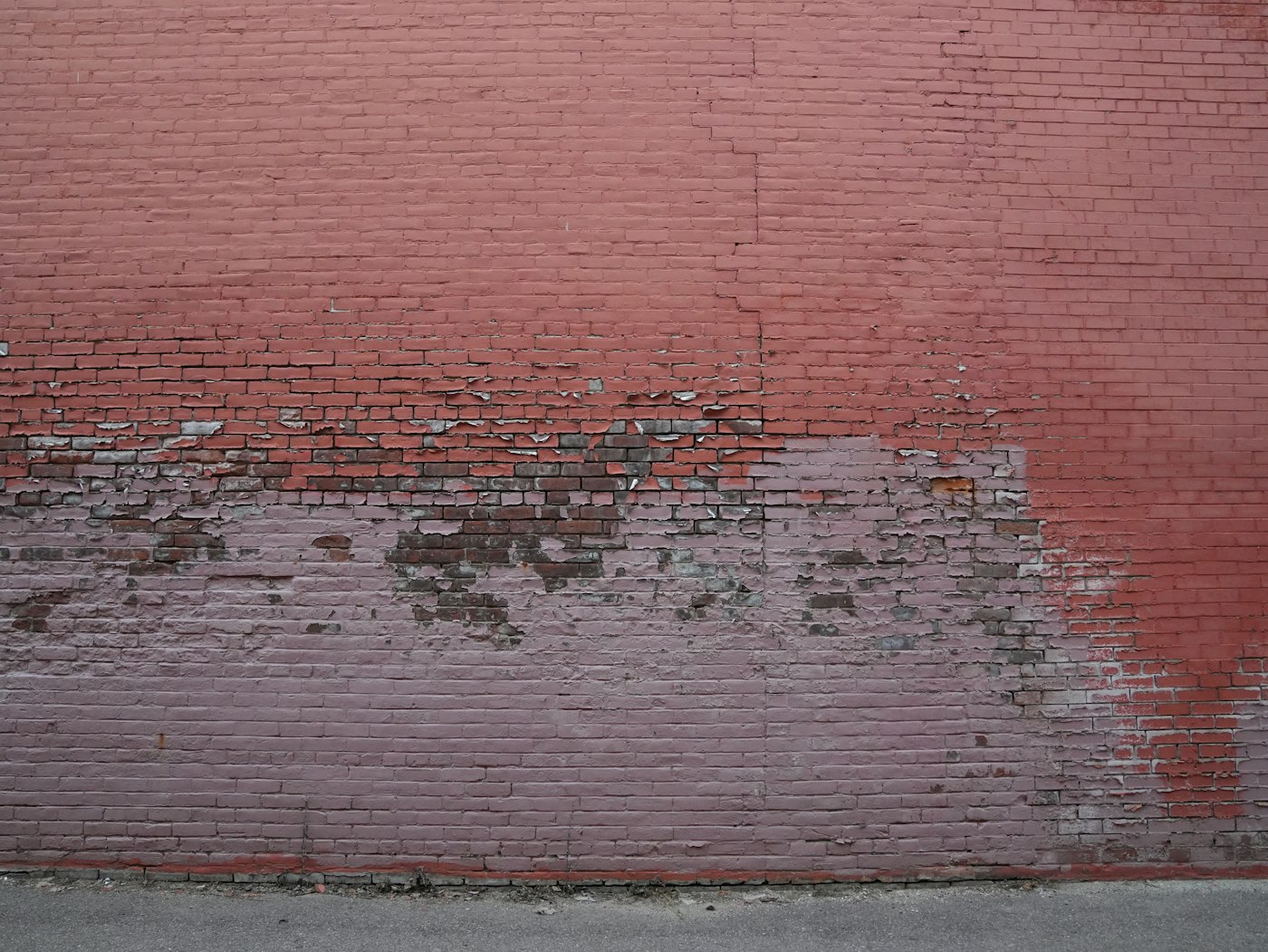
The visible sign is efflorescence: white, powdery deposits on the surface, often with paint lifting off in sheets around them. It is commonly misread as rising damp, and it matters because the treatment is different. Salt-contaminated plaster has to come off and be replaced with a salt-resistant render. Paint over it, and the salts will push the new paint off exactly as they pushed the old one off.
Cold walls, closed windows, and no central heating
Condensation is the most under-diagnosed damp in Cape Town, and the most likely to be paid for as something else.
Almost no Cape Town home has central heating. So from June onward, the house is cold, the windows stay shut against the rain and wind, and the moisture from cooking, showering and drying washing indoors has nowhere to go. It meets a cold external wall and turns back into water.
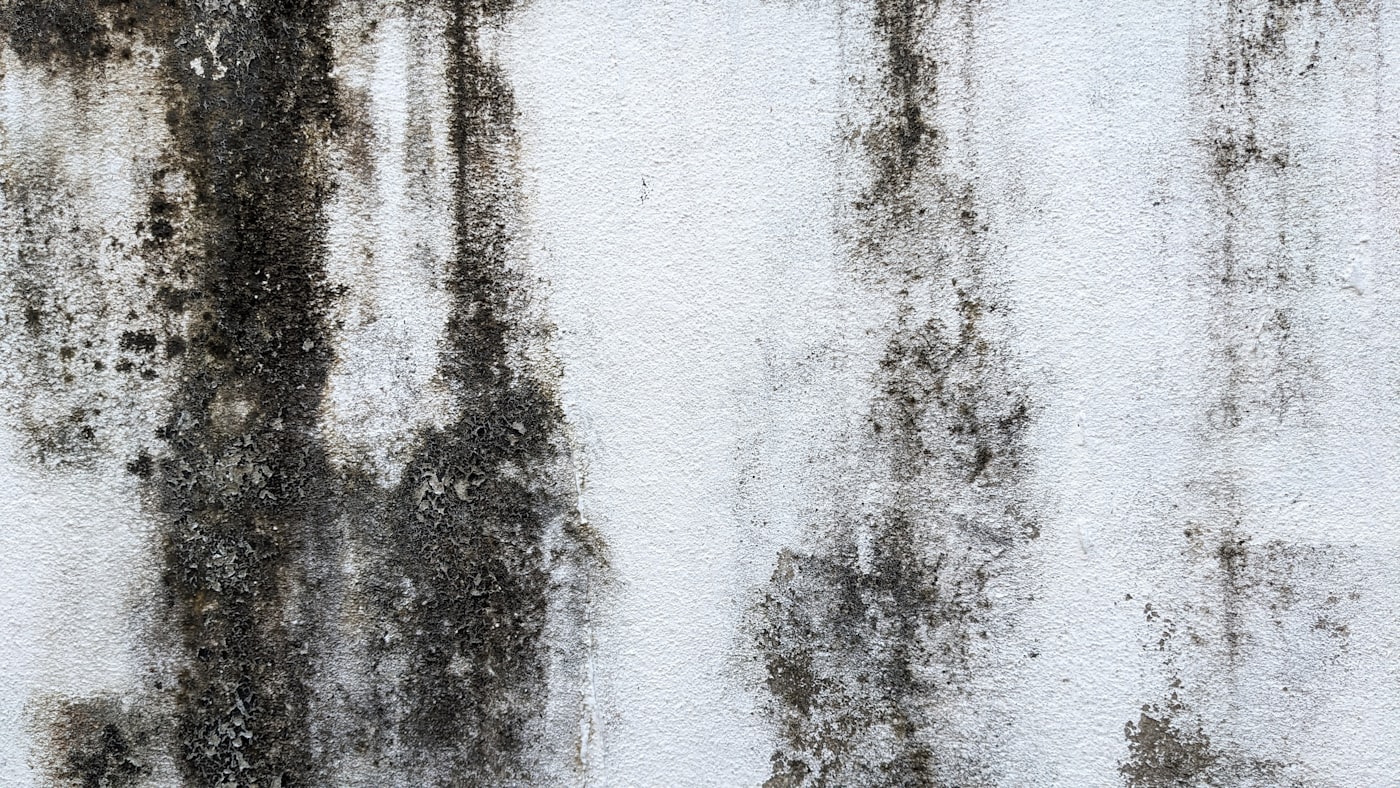
Condensation damp looks different once you know what to look for. It shows up as surface moisture and black mould rather than crumbling, salty plaster. It favours corners, the backs of wardrobes, behind furniture pushed against an external wall, and rooms that get little winter sun. It is worse in the morning. It does not track rainfall; it can be at its worst during a dry cold snap.
And it is the one type of damp where the answer is usually not waterproofing. If your problem is condensation, we will tell you so, and we will tell you that ventilation and airflow will do more for it than anything we could sell you. That conversation costs us the invoice. We would rather have it than come back in a year.
The four things that turn small damp into expensive damp
These are the ones we find over and over, and all four are cheap to catch early.
Gutters overflowing over the back edge. A blocked or badly hung gutter that spills over its back edge puts water straight down the inside face of the wall, where nothing is visible from the ground. A surprising number of the damp jobs we are called out to turn out to be gutter jobs. We now check the gutters before quoting damp work on any wall with one above it.
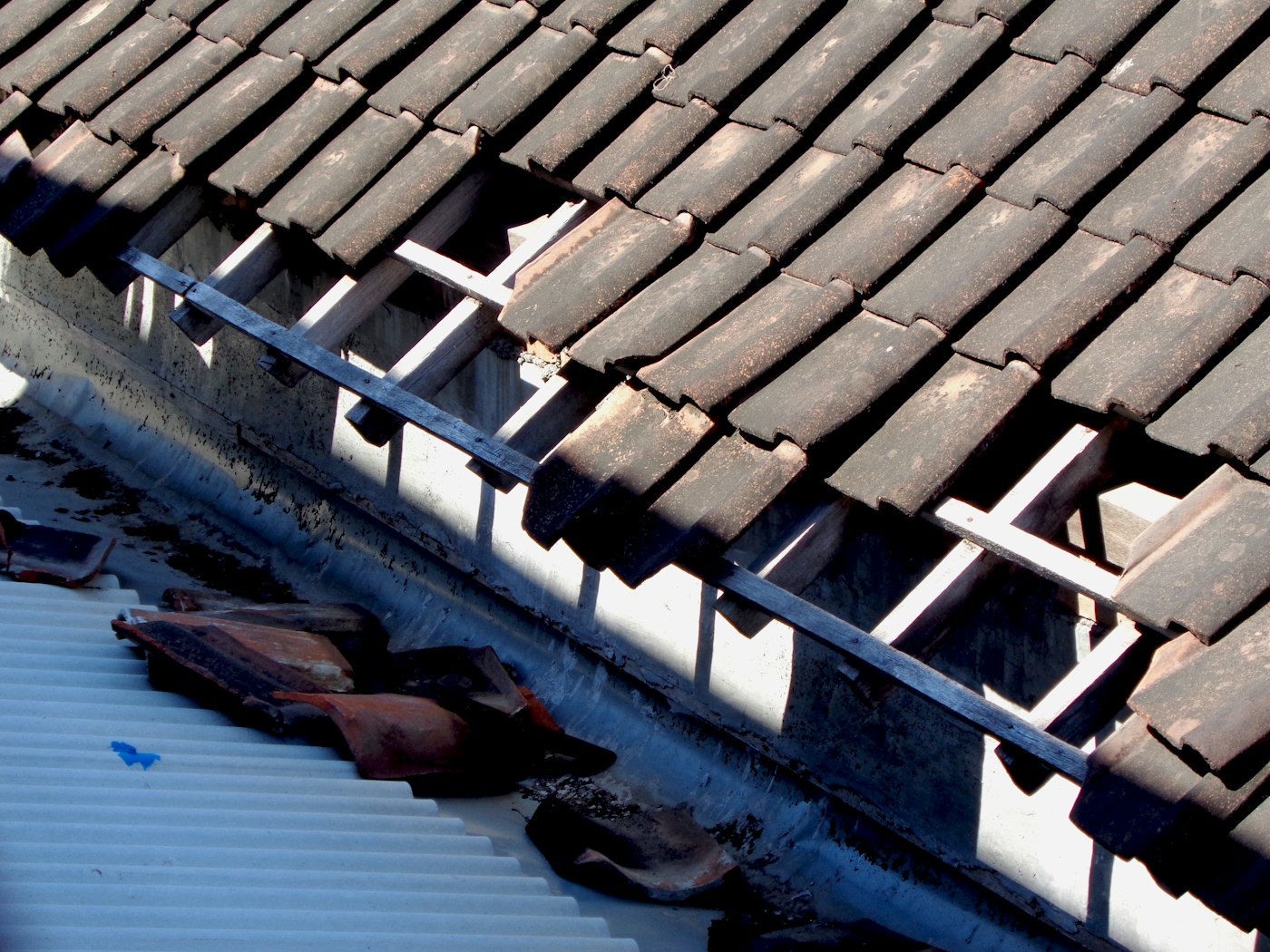
Downpipes discharging against the wall. The single cheapest fix on this list, and one of the most common causes of damp we find.
The flat-roofed extension on the back of a pitched house. Two different roof types meeting at a junction that expands and contracts seasonally. That junction needs proper detailing, not a coat of something. It is where we find the water more often than not.
Waterproof paint applied over an active problem. Sealing the inside face of a wall that is still taking on water does not stop the water. It traps it, softens the plaster from behind, and turns a repair into a replastering job. Every winter that goes by without finding the source adds to the eventual bill.
Which damp do you have? A quick self-check
| What you see | Most likely | What actually fixes it |
|---|---|---|
| A level tide mark up to about a metre, present in summer too, white salts, flaking skirtings | Rising damp | A new or reinstated damp course, or clearing what is bridging the existing one, then salt-resistant replastering |
| Patches on an outside-facing wall that appear during or after rain and dry out afterwards, usually north or west facing | Penetrating damp | Find and close the actual entry point outside, then an appropriate external system, not internal paint |
| Surface moisture and black mould in corners, behind furniture, in bathrooms; worse in the morning; unrelated to rain | Condensation | Ventilation and airflow, extraction, and treating the existing mould properly. Not waterproofing |
| A stain on a ceiling or high on a wall, worse after heavy rain | A leak, usually roof, gutter, or flashing | Trace it back to the entry point. The leak is rarely directly above the stain |
| White powder and paint peeling off in sheets on an older wall, damp on dry days | Salt-contaminated plaster | Strip the affected plaster and replaster with a salt-resistant render |
If you are not sure which row you are in, that is normal. Two of them regularly appear in the same house, and occasionally in the same wall.
Why the diagnosis matters more than the product
There is no universal damp treatment. Anyone who quotes you for damp work without first establishing which type you have is guessing, and you are the one who pays for the guess.
We have been on Cape Town roofs and walls since 2000, and the useful part of that is not the number of years. It is that the same handful of failures repeat on the same handful of building types, over and over, so we know what to look at first depending on which part of the city you are calling from and roughly when your house was built.
So we inspect before we quote. That regularly means telling people their job is smaller than they were told, that a tiled roof does not need coating, that the problem is a gutter rather than a wall, or that what they have is ventilation rather than waterproofing. Then Fred phones after the first proper front to confirm it held. If it has not, we come back at our cost.